
25th Feb 2026
How to Cut PVC Pipe in Tight or Confined Spaces
Cutting PVC pipe in a wall cavity, under a sink, or above a ceiling rarely feels straightforward. Tight space limits tool choices, makes accurate measurements harder, and increases the odds of crooked cuts and cracked and damaged fittings. In plumbing and material handling systems, those mistakes turn into leaks, callbacks, and extra repair work.
How to Cut PVC Pipe in Tight or Confined Spaces
Cutting PVC pipe in confined areas challenges access and control. Limited clearance keeps a standard miter saw out of the work zone and forces you to use compact tools or specialty PVC pipe cutter designs that fit between studs, joists, or other pipes; otherwise, it’s too easy to twist the pipe or drag the blade off line.
Poor cutting technique can also crack the pipe, especially near glued fittings, where the material already experienced stress from solvent welding and curing. If you damage the bell of a fitting, you compromise joint strength and risk leaks at normal plumbing system pressures.
Why Cutting PVC Pipe in Tight Spaces Is Challenging
Tight spaces rarely allow you to swing a full-size hand saw or position a miter saw safely, so traditional cutting setups don’t work. Instead, you have to guide compact blades at odd angles with limited stroke length. This reduces accuracy and increases the chance of cuts that wander around the pipe.
You also risk nicks to nearby copper lines, electrical cables, or framing if the blade jumps out of the kerf in a tight space. Uneven or angled cuts interfere with solvent cement coverage and contact area, which weakens the bond and can create micro-channels that allow leaks or reduced joint life under pressure.
Over time, those issues can lead to joint failure, reduced flow, and additional work to repair leaking PVC pipes.
Best Tools for Cutting PVC Pipe in Tight Spaces
Ratcheting Pipe PVC Cutters
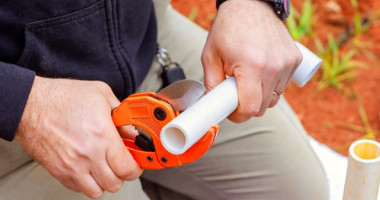
Ratcheting PVC pipe cutters work extremely well in smaller diameter pipes and mid-size PVC in confined spaces. They require minimal clearance around the pipe, and the ratcheting action allows controlled pressure that produces a clean, straight cut without heavy force.
Compact Hand Saws & Mini Hacksaws
When pipe size exceeds the capacity of a PVC pipe cutter, compact hand saws, and mini hacksaws step in. With a fine-tooth blade designed for plastic, these tools cut larger pipe in tight spaces where a full-length saw can’t travel. Progress slows compared with ratcheting tools, but steady strokes and alignment checks allow you to maintain a straight cut even when you work at awkward angles.
Oscillating Multi-Tools
Oscillating multi-tools excel when you need to cut fixed pipe close to walls, studs or other obstructions. Flush-cut blades rated for plastic allow you to cut PVC pipe nearly flush with surrounding surfaces, which matters in remodels and repairs where you can’t move the pipe. To avoid cracking the pipe or damaging fittings, control vibration by allowing the blade to do the work by using light pressure and letting the tool to reach full speed before contacting the pipe.
PVC Wire-Style Cutters (Emergency Use)
Wire-style PVC cutters or nylon-string methods use friction to cut pipe when no conventional tool fits. They are useful in extremely tight spaces or as emergency options. However, they often leave uneven or angled cuts that require careful deburring and may not suit high-pressure lines. Reserve these techniques for temporary or low-pressure applications and plan to replace that section of pipe or re-cut it with a more precise tool when access improves.
Step-by-Step: How to Cut PVC Pipe in a Tight Space
STEP 1: Measure and mark the cut line clearly, using a fine-tip marker. Mark around as much of the pipe circumference as access allows, so you have a guide.
STEP 2: Stabilize the pipe to reduce vibration by supporting it with your free hand, a clamp, or nearby framing. Take care to keep your hands away from the blade path.
STEP 3: Choose the best tool based on clearance and pipe size. Use a ratcheting PVC pipe cutter for smaller diameters, a compact saw for larger pipe or an oscillating tool for flush cuts.
STEP 4: Start the cut slowly and evenly. Avoid forcing the blade and allow the tool to establish a groove while you maintain alignment with your mark.
STEP 5: Complete the cut while watching for twisting or flexing, then inspect the end for squareness, cracks, or chips before moving on.
Tips for Getting Clean, Accurate Cuts in Confined Areas
- Mark around the full circumference of the pipe whenever possible. A thin marker or wrapping tape around the pipe works in tight spaces.
- The blade tracks more evenly if you can rotate the pipe while cutting.
- Maintain light, consistent pressure instead of forcing the cut to help reduce spiral cuts and cracking.
- Use fine-tooth blades designed for plastic to minimize chipping and rough edges.
- Pause mid-cut to check alignment and correct any drift before you reach the full depth.
Safety Precautions When Cutting PVC in Tight Spaces
Cutting PVC generates chips and shavings, so wear eye protection, even during small cuts in cabinets or crawlspaces.
Additional safety precautions include:
- Keep your hands and fingers out of the blade path, and plan your grip so the tool can’t slip toward your body in a tight space.
- Wear cut-resistant gloves.
- Ensure adequate ventilation when cutting near solvent-welded joints, as some solvent cements and primers emit VOCs that accumulate in enclosed areas.
- Watch for electrical wires when working inside walls and ceilings, and make sure the blade can’t reach them if it jumps or penetrates beyond the pipe.
- Avoid excessive build-up with oscillating and other power tools by using intermittent cuts and allowing blades to cool, as overheated plastic can melt, smear, and weaken the pipe or fitting.
Preparing the Pipe After Cutting
Before you glue or install a fitting, deburr the inside and outside edges of the pipe to remove raised lips and shavings that can interfere with solvent welding and flow. Use a deburring tool, utility knife, or file to create a light bevel on the outer edge, which helps the pipe enter the fitting smoothly and reduces the chance of pushing cement ahead of the joint.
Light sanding with fine-grit paper on the cut edge improves contact and bonding when you apply primer and cement.
Dry-fit the pipe and fitting to confirm full insertion and alignment before solvent welding, especially in tight spaces where later adjustments become difficult. Check that the pipe remains round after cutting and clamping, as distortion can reduce contact area and weaken the joint. Replace any sections that show visible out-of-roundness.
When to Replace the Section Instead of Cutting in Place
Sometimes you protect system reliability by replacing a longer section of pipe instead of forcing a cut in place. Severely restricted access points that require improvised tools or unsafe body positions often justify cutting out more pipe to work in a safer, more controlled area.
If you see cracked, discolored, or visibly stressed pipe sections near your intended cut, replacement of a larger section offers a better long-term solution than patching a compromised line.
High-pressure plumbing or chemical-handling systems place greater demands on joint integrity, so any questionable cut or repaired area warrants replacement with properly prepared pipe and fittings. While replacement may increase immediate cost and time, it reduces the likelihood of future leaks, damage, and repeat labor, particularly where you can’t easily access the pipe later for PVC fitting maintenance.
Why Proper Cutting Tools Matter for Long-Term PVC Performance
Clean, square cuts support strong solvent-welded joints by maximizing contact area between the pipe and fitting and allow for even distribution of primer and cement. Proper cutting minimizes rough edges and internal obstructions, which maintains flow efficiency and reduces turbulence in plumbing and material handling systems that use PVC pipes. With the correct tool for each tight space, you achieve professional-grade results that resist leaks and failures over the life of the installation.
For future projects, partner with expert PVC suppliers who offer a wide range of PVC pipe, compatible fittings, cutters, and accessories, along with guidance on installation best practices so you can avoid repairs and know exactly how to repair leaking PVC pipes.