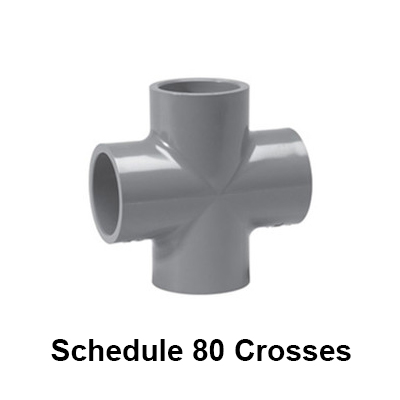
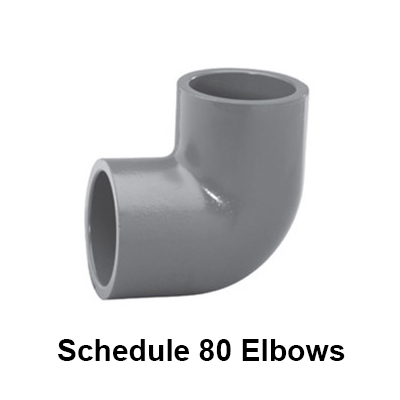
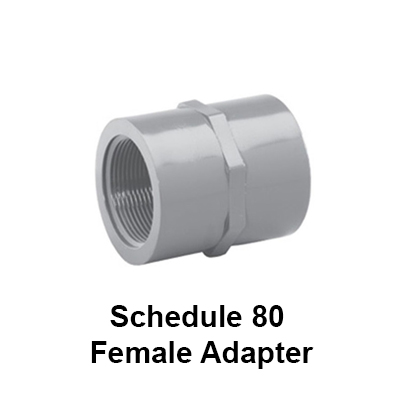
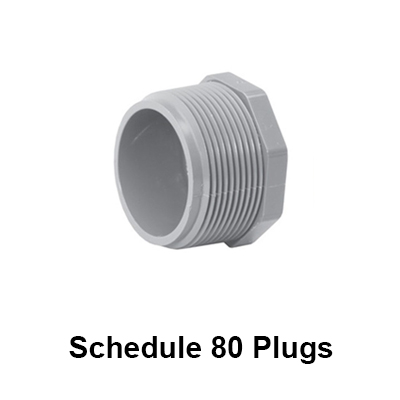
Uses for Schedule 80 PVC Fittings
Schedule 80 PVC fittings are built to meet the demands of high-performance applications where reliability, chemical resistance, and pressure tolerance are non-negotiable. Their thicker walls and sturdy construction make them ideal for challenging environments — outperforming both Schedule 40 PVC and traditional metal alternatives in many key areas.
Ideal Use Cases
These fittings are commonly used in:
- Commercial water systems that require higher operating pressure
- Industrial process piping where chemical exposure is a concern
- Water treatment and wastewater systems
- Irrigation and agricultural systems that handle abrasive or corrosive liquids
- Laboratory and chemical processing setups with aggressive media
Whether you're handling potable water, chemicals, or pressurized air systems, Schedule 80 PVC fittings deliver reliable performance across sectors and settings.
Material Strength & Performance
Compared to Schedule 40 PVC, Schedule 80 offers:
- Thicker walls for improved crack resistance and tensile strength
- Long-term durability under higher PSI ratings
- Lightweight convenience without compromising strength
- Excellent corrosion resistance, especially in outdoor or underground settings
Unlike metal fittings, Schedule 80 PVC won’t rust, scale, or deteriorate over time, making it a cost-effective solution for long-term installations.
Connection Options & Types
Maxx Supply offers a full lineup of Schedule 80 PVC fittings to suit nearly any configuration:
- Socket and threaded ends to integrate with both new builds and retrofits
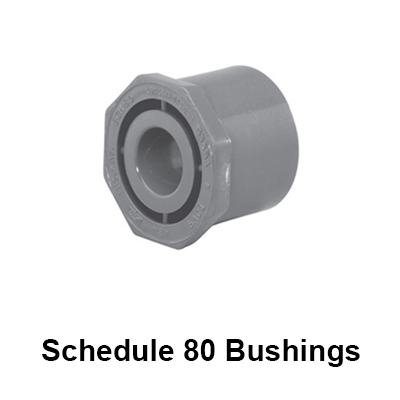
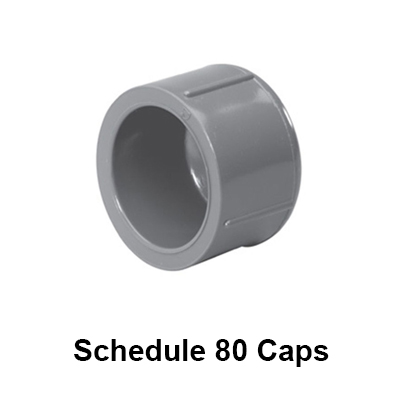
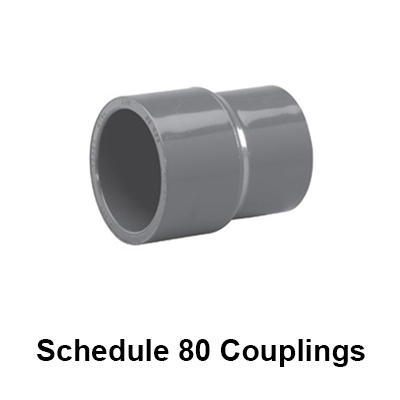
- Elbows, tees, couplings, nipples, flanges, and more
- Specialized fittings like female adapters, swing check valves, and PVC duct fittings
All fittings are manufactured to be compatible with standard Schedule 80 PVC pipe, ensuring safe, leak-proof installation and dependable system performance.
What to Look for in Schedule 80 PVC Fittings
Start with the product specs. Maxx Supply’s SCH 80 PVC fittings are NSF-certified for potable water use, and applicable socket fittings comply with ASTM D2467. For couplings, the polyvinyl chloride material should meet all ASTM D1784 requirements.
Compare the fitting to the media, pressure, and temperature in the system. Schedule 80 PVC resists acids, alkalis, corrosive materials, stress cracking, and corrosion, making it a trusted choice for chemical processing and water treatment. Since polyvinyl chloride doesn’t rust or scale like metal, it eliminates the risk of corrosion-related leaks. Still, confirm compatibility for the specific fluid and operating temperature.
Make sure that the fitting dimensions and PVC Schedule match the pipe. Also review the listed pressure rating, as it varies by type and size. Schedule 80 PVC can withstand temperatures up to 140°F (60°C), but allowable pressure decreases as temperature rises. Follow the manufacturer’s pressure-derating guidance above 73°F.
How to Choose the Right PVC Fitting
Select fittings according to system pressure, media, and layout. PVC Schedule 80 products have thicker walls and higher pressure ratings than Schedule 40 components, making them ideal for more demanding plumbing projects and industrial applications. Highly durable construction provides reliable performance across high-pressure and corrosive environments.
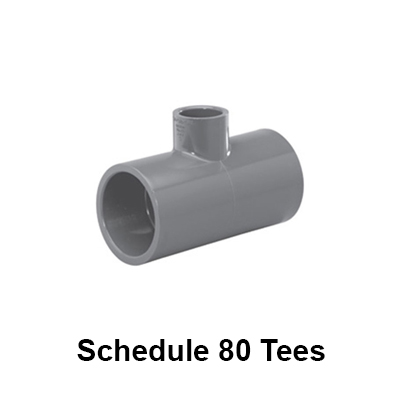
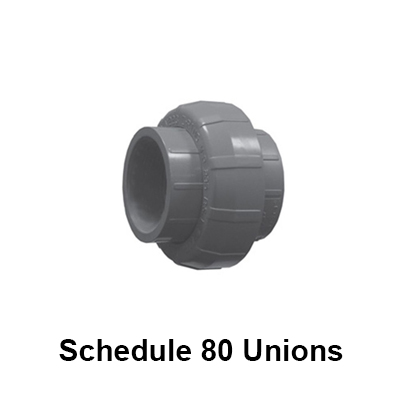
Connection options should also shape your selection. Socket fittings are solvent-welded, while threaded fittings connect to compatible components. Elbows change the direction, tees create branches, and couplings join two pipes together in a straight run.
Schedule 80 PVC couplings go from 1/4 inch to 12 inches in diameter. Reducer couplings connect different pipe sizes, with options ranging from 3/4 x 1/2 inch through 10 x 6 inches. Before ordering any PVC fittings, check the inventory and expected lead time. Verify each valve, adapter, and coupling so one missing component doesn’t delay the whole job.
Installation and Maintenance for PVC Schedule 80
Measure, cut, deburr, and clean pipe ends before making a connection. Use approved primer and solvent cement, then carefully follow the manufacturer’s instructions; cure time changes with pipe size, temperature, humidity, and system pressure.
For threaded PVC Schedule 80 fittings, use a compatible thread sealant and avoid overtightening, which stresses the fitting. After the joints cure, pressure-test the piping according to applicable code. Test with a suitable liquid and proper safety controls.
PVC fittings require little routine maintenance, but periodic inspection catches any leaks, impact damage, or stress near joints. It’s best to replace damaged fittings instead of trying to patch them.
Frequently Asked Questions About Schedule 80 PVC
What is a Schedule 80 PVC fitting?
Schedule 80 PVC fittings are a pipe system component made from rigid polyvinyl chloride. “Schedule 80” identifies the wall-thickness classification. These fittings feature thicker walls for greater pressure capacity than comparable Schedule 40 products.
Are there any disadvantages of using Schedule 80 PVC?
Thicker material makes SCH 80 PVC fittings heavier and more expensive than Schedule 40 alternatives. Their smaller internal opening can also reduce flow compared to a Schedule 40 component of the same nominal size.
Can Schedule 40 PVC fittings be used with Schedule 80 PVC?
Schedule 40 and Schedule 80 use the same nominal outside pipe dimensions, so compatible socket or threaded components can connect. However, systems are limited by the lowest-rated component. Using SCH 40 fittings can reduce the pressure capacity of an otherwise SCH 80 PVC system. Check the pressure, temperature, media compatibility, connection type, and code requirements before mixing schedules.
Is Schedule 80 PVC suitable for potable water?
Yes. Check for NSF certification on the individual product page before purchasing.