
27th Mar 2026
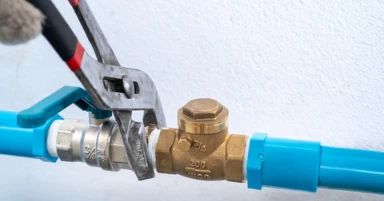
How to Install a PVC Check Valve
Correct check valve installation protects equipment, prevents contaminated backflow, and stabilizes fluid systems in homes, commercial buildings, and industrial facilities. A PVC check valve allows flow in only one direction, so it safeguards water pumps, water lines, and process piping from reverse flow that can slam components, cause water hammer, or pull air into the system. When a check valve fails or installers position it incorrectly, systems can lose prime, drain traps are at risk of losing their water seal, and sensitive devices may see pressure spikes that shorten service life.
Industry guidance recommends a straight run of pipe on both sides of the valve and enough distance from elbows and pumps to minimize disturbances that lead to premature failure. With the correct PVC check valve, correct orientation, and proper solvent welding technique, you build a reliable line of defense against leaks, nuisance cycling, and water hammer events.
How to Install a Check Valve
Installers first understand why check valve installation matters before they cut any PVC pipes. A check valve sits inline and prevents backflow, so incorrect orientation or poor joint preparation can completely defeat the device’s purpose. Many plumbing, irrigation, and industrial systems rely on check valves on pump discharges, vertical risers, and critical branches where reverse flow would flood equipment or contaminate upstream water.
Incorrect installation can cause several problems:
- Backflow and reverse flow that damage pumps and contaminate clean water sources
- Water hammer due to sudden flow reversals that slam the disc or poppet against the seat and send pressure waves through the line
- Excess pressure when installers select the wrong valve type or mount the valve in turbulent zones, reducing system performance
- Premature valve failure from misalignment, lack of pipe support, or solvent-weld defects that crack the valve body or leak
When you install PVC check valves correctly, you protect every downstream and upstream component in the system from those risks.
What Is a PVC Check Valve?
A PVC check valve is a non-return valve that allows one-way flow and automatically closes when fluid tries to move backward. Internal components respond to the pressure differential: Forward water flow opens the passage, and a drop or reversal in pressure seats the disc, ball, or poppet to block reverse flow. This behavior prevents backflow, which would otherwise introduce contaminated water or process media into clean lines, storage tanks, or pump suction piping.
Common systems that rely on PVC check valves include sump and sewage ejector lines, irrigation, and agricultural piping, pool and spa systems and many light-duty industrial process lines. Installers place check valves near pump discharges, before vertical risers or at points where reverse flow would empty lines or damage sensitive equipment. By maintaining controlled water flow direction, each valve supports safe, predictable operation of the overall system.
Types of PVC Check Valves
Swing Check Valves
A swing check valve uses a hinged disc that swings open with forward flow and swings closed under gravity and reverse pressure. That swing check design works very well in horizontal piping, where the disc can move freely without blending, and it suits relatively clean water or low-viscosity fluids.
Best use cases include sump pump discharges, gravity drainage lines, and low-to-moderate pressure water systems where minimal pressure drop matters. Industry sources recommend horizontal installation for swing check valves because vertical mounting can cause the disc to hang partially open or close unpredictably.
Spring (Inline) Check Valves
Spring or inline check valves use a spring-loaded poppet that compresses under forward flow, and snaps closed when flow decreases or reverses. This compact design allows installation in tight spaces and supports vertical and horizontal orientation when the product rating permits it.
Because the spring must compress, these check valves introduce a modest pressure drop that you need to factor into pump sizing and system design. Spring-loaded designs close quickly, so they reduce water hammer by limiting the distance and time of reverse flow before the valve seats.
Ball Check Valves
These valves use an internal ball that lifts from the seat when flow moves in the allowed direction and settles back to seal when flow reverses. The ball design tolerates some debris and suspended solids, so installers often choose it for sewage, effluent, or industrial process lines with particulate content.
You still maintain the valve by periodically flushing or inspecting it because heavy fouling or buildup can prevent full seating and allow slow backflow. Manufacturers often specify orientation and access requirements, so you plan installation to allow removal or cleaning without cutting large sections of pipe.
Tools and Materials Needed to Install a PVC Check Valve
Gather every tool and material you need prior to starting the check valve installation. Typical items include:
- PVC check valve sized for the pipe and application
- PVC pipe cutter or fine-tooth saw for clean, square cuts
- Measuring tape and marker to lay out the cut length and valve position
- PVC primer and cement approved for the pipe material and pressure rating
- Deburring tool or sandpaper to remove burrs and bevel pipe ends
- Clean rags to wipe debris, moisture, and excess cement
- Safety gloves and eye protection for solvent handling and cutting operations
Quality PVC pipes and compatible fittings further reduce leak risk and support long-term performance.
Installation Tips for PVC Check Valves
Several best practices help ensure proper valve performance and long service life. Installers support pipes independently and avoid using the valve body as a structural member, especially for larger diameters that add weight and bending moments. Proper supports keep misalignment and vibration from cracking the valve body or stressing the solvent-welded joints.
Place the valve on a straight run of pipe with at least several pipe diameters of straight length upstream and downstream to minimize turbulence and valve chatter. Provide enough clearance and access so you can reach unions, bolts, or couplings for inspection and replacement. In applications where you expect maintenance, install unions on both sides of the valve to allow rapid removal without cutting the pipe.
Step-by-Step: How to Install a PVC Check Valve
Step 1: Shut Off and Drain the System
Shut off the water or fluid supply to the section where you will work. Open downstream faucets, drains, or vents to relieve pressure and allow the remaining fluid to drain from the pipe. Always verify that gauges read zero and lines feel depressurized prior to cutting into the system.
Step 2: Determine Flow Direction
Locate the flow arrow cast or printed on the valve body and orient the valve so the arrow matches the intended fluid flow direction. Manufacturers explicitly warn that reverse installation will prevent the check valve from functioning and can cause backflow or rapid failure. Confirm orientation relative to the pump or upstream source. The arrow should point away from the pump discharge when you protect against reverse flow back into the pump.
Step 3: Measure and Cut the Pipe
Measure the overall length of the valve, including socket depth, and mark the section of pipe you will remove. Use a PVC pipe cutter or saw to make clean, square cuts that keep the pipe ends perpendicular to the valve body and prevent misalignment. Remove burrs and bevel the edges lightly so solvent cement can form a uniform bond without shavings entering the water flow.
Step 4: Dry-Fit the Check Valve
Dry-fit the valve between the cut pipe ends to verify alignment, spacing, and clearance around the valve body. Confirm again that the flow arrow points from the source toward the load and that the valve doesn’t interfere with nearby supports, walls, or equipment. Adjust support as needed to ensure the pipe and valve sit in a neutral position without visible strain.
Step 5: Solvent Weld the Valve in Place
Clean and dry the pipe ends and valve sockets, then apply PVC primer to the pipe and valve socket per the product instructions. While the primer remains wet, apply PVC cement to the pipe and the inside of the valve socket, insert the pipe fully with a quarter-turn twist, and hold the joint together to prevent push-out as the cement sets. Repeat for the other side, then wipe excess cement from the outside of the joint without disturbing the connection.
Cure Time and System Testing
Solvent cement joints require adequate cure time prior to pressurizing the system, and manufacturers publish cure charts based on pipe size, temperature, and pressure. For many typical residential and light commercial systems, guidelines recommend several hours at a minimum and up to 24 hours or more for larger diameters, higher pressures, or lower temperatures. Always follow the cement manufacturer’s instructions and extend cure times in cool or humid conditions.
When the cure period ends, restore pressure gradually rather than opening valves fully at once. Observe the check valve and adjacent joints for leaks while the system pressurizes, then cycle pumps or equipment to confirm that water flow moves in the correct direction and that the valve closes smoothly without chatter.
Common Mistakes to Avoid When Installing a PVC Check Valve
Several recurring errors cause check valve installation problems. Installers sometimes mount the valve backward, ignore manufacturer flow direction markings, or assume orientation doesn’t matter. That oversight eliminates backflow protection and can damage pumps or equipment. Others rush solvent curing and pressurize PVC joints too soon, which leads to micro-cracks, leaks, or joint blowouts under pressure.
Using the wrong valve type for the application also creates headaches. For example, swing check valves in vertical lines or in dirty service, where a spring or ball design would perform better. Installing check valves too close to pumps or elbows can cause issues, as these locations create further turbulent flow that increases pressure loss, intensifies water hammer, and shortens valve life.
When to Use a PVC Check Valve
Installers use PVC check valves wherever they need to prevent backflow and reverse flow in non-metallic piping. Typical examples include pump systems such as sump pumps, booster pumps, and irrigation pumps, where the valve protects the pump from reverse rotation and maintenance priming in suction and discharge lines.
Check valves also protect downstream equipment such as filters, softeners, and meters from pressure surges and back-siphonage that could pull contaminants upstream. In irrigation and industrial process control applications, well-placed check valves preserve directional fluid flow and prevent mixing between incompatible fluids or chemical streams.
PVC Check Valves vs. Other Backflow Prevention Devices
PVC check valves differ from backflow preventers, which often use more complex assemblies with test cocks and relief valves to meet strict code requirements for potable water or high-hazard connections. A simple check valve offers basic non-return protection, but local plumbing codes sometimes require listed backflow prevention devices instead, particularly on municipal water connections or cross-connection points.
Performance also differs. Specialized backflow preventers handle known pressure conditions and provide testable protection, while check valves deliver compact, low-maintenance one-way flow control in many generalized applications. Evaluate application limitations, regulatory obligations, and maintenance capabilities before deciding whether a check valve alone offers adequate protection.
Choosing the Right PVC Check Valve
Valve selection starts with fundamentals, including pipe size, system pressure, fluid type, and debris content. Match the check valve’s pressure rating to the pump and system design, then verify material compatibility with the fluid to avoid swelling or chemical attack. In dirty or particulate-laden water, a ball check valve or other design that tolerates solids often outperforms a standard swing check valve.
Orientation requirements also matter. Some swing check designs need horizontal mounting, while many spring inline valves accept vertical and horizontal installation. Plan for maintenance by ensuring accessibility and, when appropriate, adding unions that allow you to remove the valve without cutting PVC pipes. For metal piping or transitions, you might pair a PVC system with a brass-threaded check valve where code or operating conditions make brass preferable.
Working with expert supplier Maxx Supply simplifies this process because you gain access to a wide selection of PVC check valves in different styles, sizes, and connection types, along with compatible pipe, fittings, and accessories that support reliable valve installation.
One-stop sourcing for flow-control components reduces compatibility issues and helps DIY users, plumbers, and engineers specify check valves that minimize water hammer, protect every pump, and maintain stable water flow throughout the system.