
21st Apr 2026
How to Install PVC Unions
How to install PVC unions correctly keeps your system easy to service and far less likely to leak, whether you work as a professional plumber or a DIY homeowner. You will have the ability to disconnect pumps, water heaters, filters, or sections of PVC piping without cutting into the line every time something needs attention.
A PVC union looks simple, but you need the correct tools, proper surface prep, and a clear step-by-step process to avoid leaks and premature gasket failures. You also need to choose the right union fitting type and match it to the correct PVC pipe schedule, pressure rating, and size, so the joint performs well under real-world operating conditions.
When you know how to install PVC union fittings properly, including cutting square, using PVC primer, and PVC cement where required, along with tightening the union correctly, you build a system that disassembles easily, yet seals under pressure. You also need to know how a PVC union works, when to use it instead of a coupling, and how to install it with the proper tools.
HOW TO INSTALL PVC UNIONS
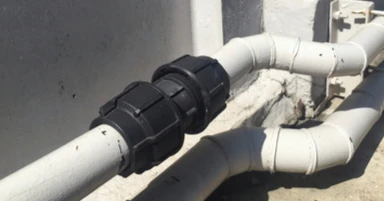
A PVC union is a three-piece pipe union that allows you to disconnect a line without cutting the PVC pipe. It sits near pumps, valves, filters, heaters, and other equipment, so you can remove components for service or replacement.
Instead of a permanent joint, such as a standard coupling, a PVC union fitting assembly uses a gasket or O-ring and a threaded nut to pull two mating faces together and create a seal. You use a union fitting when you expect future repairs, upgrades, or seasonal disassembly, which is common in pool plumbing, irrigation manifolds, and mechanical room plumbing systems.
Install a union instead of a standard coupling when you:
- Need regular access to a pump, filter, softener, or valve
- Work in tight spaces where cutting pipe later would be difficult
- Want modular sections that you can swap or reroute without replumbing the entire run
In practice, you follow a predictable installation sequence:
- Plan the location
- Cut and prepare the pipe
- Attach the union ends with PVC cement or thread sealant
- Assemble the union
- Test the connection for leaks under pressure
For pressure-rated projects, also verify that the PVC fittings and PVC piping schedule and pressure rating match the operating conditions of the system.
UNDERSTANDING HOW PVC UNIONS WORK
A PVC union consists of three main components: two end connections and a central threaded nut that draws those two ends together. Each end may be a slip socket, a female thread, a male thread, or one of each for mixed unions. This allows you to adapt different pipe fittings in the plumbing layout. Between the faces of the union is an elastomeric O-ring or gasket that compresses when you tighten the nut, which creates a watertight seal.
Unlike glued couplings, a union allows you to break the line apart by loosening the nut while leaving the glued or threaded ends attached to the surrounding pipe. That design allows you to disconnect equipment or reconfigure sections without cutting or replacing PVC pipe. Slip unions glue onto the pipe with PVC primer and PVC cement, while threaded unions rely on tapered threads plus thread sealant for a mechanical seal. Mixed slip-by-thread designs give you flexibility when one side terminates in a threaded valve or device, and the other ties into straight pipe.
WHEN TO USE PVC UNIONS
PVC union fittings shine anywhere you need fast access or modular plumbing. Common locations include:
- On both sides of pumps, filters, and UV systems in pool or well plumbing
- Adjacent to ball valves and check valves to allow easy replacement
- At equipment connections in mechanical rooms or pump houses
- In irrigation manifolds, where you can anticipate rerouting or expansion
Professionals also prefer a union fitting over a permanent coupling in tight spaces where a saw or pipe cutter may not fit in the event of future repairs. In modular systems, strategic unions allow you to isolate sections, drop them out, and reinstall without disturbing the rest of the plumbing systems. When you plan a project, map out any valves, pumps, or devices that may fail or require periodic cleaning. Those locations almost always justify a pipe union instead of a solid coupling.
TOOLS AND MATERIALS NEEDED
Before you learn how to install PVC union fittings, gather the proper tools so each joint cures correctly and seals under pressure. You typically need:
- PVC pipe
- Appropriate PVC union or PVC fittings that match the pipe schedule and diameter
- PVC primer and PVC cement for slip connections on PVC piping
- A pipe cutter, miter saw, or fine-tooth saw capable of clean, square cuts
- Deburring tool, utility knife, or sandpaper to smooth edges and remove shavings
- Thread sealant or PTFE tape for threaded ends on the male thread or female thread components
- Clean cloths or rags to wipe dirt, oil, and excess cement
- Safety glasses and gloves to protect eyes and skin during cutting and priming
Each tool supports a specific step. The pipe cutter ensures square ends; the primer and cement chemically weld the slip sockets; thread sealant fills microgaps in tapered threads; and deburring maintains a full sealing area, so the O-ring sits square.
STEP-BY-STEP: HOW TO INSTALL PVC UNIONS
Follow these steps to complete the installation with a professional, leak-free finish:
Step 1: Plan the Installation Location
Decide where to place the PVC union relative to pumps, valves, or other equipment before you pick up the saw. Choose accessible spots where you can get a full hand or wring around the nut. Cramped corners make future maintenance difficult and increase the risk of cross-threading. Verify that you have enough straight pipe on both sides for proper socket engagement or threads and leave clearance behind the union so you can slide the equipment out once you loosen the nut. Dry-fit the surrounding pipe fittings and devices to confirm alignment, then mark the union locations on the pipe.
Step 2: Cut and Prepare the Pipe
Use a pipe cutter or fine-tooth saw to cut the pipe square at the marks. An angled cut reduces the contact surface between the pipe and fitting and can create stress points that lead to a leak. After cutting, deburr the inside and outside edges with a deburring tool or knife, then lightly sand or wipe the ends to remove dust and shavings. Test-fit the pipe in the union sockets or threaded components without cement to verify that the insertion depth and alignment match your layout.
Step 3: Attach the Union Ends
For slip ends, apply PVC primer to the outside of the pipe and the inside of the union socket, following the manufacturer’s instructions for coverage and dwell time. Immediately follow with an even coat of PVC cement on both surfaces, avoiding heavy puddles that can weaken the wall or drip into the O-ring area. Push the pipe fully into the socket while twisting about a quarter turn to distribute the cement, then hold it for 20 to 30 seconds to prevent push-back.
For threaded ends, wrap the male thread components with PTFE tape or apply an appropriate thread sealant compatible with PVC, taking care that you don’t over-apply or contaminate the sealing face for the O-ring. Thread the union end onto the valve or fitting hand-tight, then snug it with a wrench without overtightening it, which can crack the fitting.
Step 4: Assemble the Union
Once both union ends attach to their respective pipe or devices, bring the two sides together. Make sure the gasket or O-ring sits in the groove properly and has no twists, cuts, or debris that could compromise sealing. Slide the nut over one end, align the mating faces, and start the nut by hand to avoid cross-threading. Tighten the nut hand, and if the manufacturer allows, add a small additional turn with a strap wrench. Avoid over-tightening, which can distort the sealing surfaces, crush the gasket, or crack the union body and create a leak path.
Step 5: Test the Connection
Solvent-welded joints require a cure time prior to pressurizing the system. Follow the cement manufacturer’s chart, which can range from 15 minutes to 24 hours, depending on pipe size, temperature, and pressure. After the cure window, slowly pressurize the line while monitoring the union area, especially around the nut and the joint between the pipe and fitting. Inspect it visually and run a dry finger or paper towel around the union to check for moisture, which indicates a leak. If you see minor seepage at the union faces, depressurize and slightly tighten the nut, taking care not to overtighten it, then retest. Leaks at glued joints usually indicate poor prep and may require a replacement.
SLIP VS. THREADED PVC UNIONS
Slip PVC union fittings attach to the pipe with solvent welding, creating a permanent bond between the pipe and union ends, but still allow for disassembly at the union nut. Threaded unions use tapered NPT threads on the ends to connect to valves, pumps, or threaded connections.
Use slip unions when:
- You build new PVC piping runs where you control pipe alignment
- When you need maximum pressure integrity and minimal risk of thread leaks
- When you work with smooth, unthreaded pipe ends
Use threaded unions when you:
- Connect directly to threaded valves, pumps, or equipment ports
- Anticipate frequent removal or replacement of a component
- Want to avoid solvent cement near sensitive equipment
In high-pressure or industrial systems, Schedule 80 unions and pipe often make sense due to their thicker walls and higher pressure ratings, while residential and light commercial plumbing often relies on Schedule 40 components.
Always match union type, schedule, and pipe size to the pressure, temperature, and chemical conditions of the system.
MAINTENANCE TIPS FOR PVC UNIONS
PVC unions require periodic inspection as part of a good maintenance routine. At least once per season for pools or annually for domestic plumbing, check around each union for signs of weeping or mineral deposits that indicate a slow leak. If the system allows, depressurize, loosen the nut, and inspect the O-ring or gasket for flattening, cracks, or chemical attack.
Replace worn seals with manufacturer-approved parts. When reassembling, clean the mating faces and threads, then tighten the nut just enough to stop leaks, since chronic over-tightening accelerates stress and failure in plastic fittings.
Avoid strong solvents and petroleum-based lubricants on O-rings unless the manufacturer specifically approves them. Many professionals use silicone-based lubricants formulated for elastomeric seals. In outdoor systems, protect exposed PVC piping and unions from prolonged UV exposure using insulation, paint rated for PVC, or covers, which reduces brittleness over time.
INSTALLING PVC UNIONS FOR LONG-TERM FLEXIBILITY
When you choose and install a pipe union correctly, you gain long-term flexibility for repairs, upgrades, and equipment swaps without major demolition. Unions reduce the need to cut pipe during maintenance, which keeps your PVC piping layout cleaner and lowers the risk of introducing misaligned joints or new leaks after every service event.
In residential and commercial plumbing systems, well-placed PVC union fittings improve serviceability, minimize downtime, and extend overall system life by letting you maintain components instead of rebuilding large sections of pipe. Sizing unions to the correct PVC pipe sizes, choosing between Schedule 40 PVC unions and Schedule 80 PVC unions, and using the proper primer, cement, and thread sealant all contribute to a durable, leak-free installation that stands up to real-world use.
For reliable unions, pipe fittings, and PVC pipe, Maxx Supply offers specification-driven options that help contractors, maintenance crews, and DIY users build systems that remain easy to service for years.