
10th Mar 2026
How to Remove a Broken PVC Pipe
Removing a broken PVC pipe takes more than simply cutting out the damaged section and adding a new piece. Breaks often occur at a PVC pipe fitting or solvent-welded PVC joint where PVC cement and PVC glue create a permanent bond. If you try to force the pipe out with the wrong tools, you can damage the fitting and create future leaks. In many cases, the broken PVC pipe must be carefully removed from inside the fitting before you can rebuild the connection and complete a proper repair.
HOW TO REMOVE A BROKEN PVC PIPE
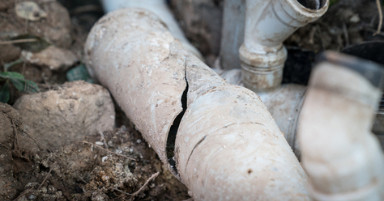
A broken PVC pipe can crack along its length, snap off at a PVC pipe fitting, or sheer flush with a wall, slab, or valve body. When the break happens inside a fitting socket, cutting the pipe doesn’t solve the issue because the solvent-welded stub remains bonded inside the PVC fitting.
Improper removal can damage fittings, especially if chisels, pliers, or heat deform the PVC pipe fitting during the process. That damage can create new leaks in pressurized water lines and place constant strain on nearby PVC joint connections.
When the pipe or fitting is compromised, people often rely on tape or temporary repair products instead of properly rebuilding the joint with couplings, PVC glue, and PVC cement, which can lead to future leaks or a recurring leaking PVC pipe.
COMMON CAUSES OF BROKEN PVC PIPE
PVC pipe breaks for predictable reasons, many of which you can prevent:
- Impact damage or excessive force from being struck by tools, vehicles, or machinery
- Freeze damage that occurs when trapped water expands inside the pipe
- Improper installation or support, leading to sagging and stress points
- Aging or UV exposure on outdoor or unprotected PVC pipes
- Over-tightened fittings or valves that crack hubs or threads
ASSESSING THE DAMAGE BEFORE REMOVAL
Before deciding how to remove a broken PVC pipe, assess the damage carefully. Identify where the pipe broke – mid-span, near a coupling, inside a PVC pipe fitting, or at a valve or threaded adapter – and determine whether the connection was solvent-welded with PVC cement or assembled with a mechanical or threaded fitting.
Inspect the fittings for cracks, distortion, or chemical damage to determine whether they can be reused, and evaluate clearance around the pipe, including nearby walls, concrete, adjacent lines, and sensitive equipment. Then choose a removal method that protects reusable fittings while leaving enough straight pipe for a secure repair and a strong PVC joint.
TOOLS NEEDED TO REMOVE A BROKEN PVC PIPE
The correct tools make removal safer, faster, and more precise.
- PVC pipe cutter or fine-tooth saw for a clean, square cut
- Flathead screwdriver or chisel for controlled manual pipe removal from fittings
- Heat gun for carefully softening pipe walls when necessary
- Internal pipe reamer or fitting saver designed for PVC
- Utility knife for trimming thin shavings and cleaning edges
- Pliers for collapsing loosened pipe segments and pulling debris
- Safety gloves and eye protection to guard against shards and splashes from PVC glue or primer
STEP-BY-STEP: HOW TO REMOVE A BROKEN PVC PIPE
Step 1: Shut Off and Drain the System
- Turn off the water or fluid supply at the main valve or relevant isolation valves.
- Open downstream faucets or drains to relieve system pressure.
- Allow water to drain until the broken area runs completely dry before you work, since moisture interferes with PVC glue and safe tool handling.
Step 2: Remove Loose or Exposed Pipe Sections
- Cut away cracked, jagged, or dangling pipe using a PVC cutter or saw, making square cuts to leave neat ends.
- Clear the work area by removing debris and any temporary tape or clamp-style repair products.
- Avoid stressing remaining joints by supporting nearby pipe runs while you cut and handle the damaged section.
Step 3: Removing PVC Pipe Stuck Inside a Fitting
When a piece of pipe remains glued inside a PVC fitting:
- Use a small saw blade or utility knife to score the inside of the pipe lengthwise in two to four equally spaced cuts, taking care not to cut into the socket wall.
- Insert a flathead screwdriver at a score line and apply controlled inward pressure to collapse the pipe wall toward the center.
- Remove segments one at a time until the fitting socket shows only a thin film of old PVC and PVC cement.
Step 4: Using a Fitting Saver or Reamer (if Applicable)
An internal pipe reamer, often called a fitting saver, mounts on a drill and grinds out the stub from inside the fitting.
- The tool cuts through the remaining pipe wall without damaging the fitting socket if used correctly.
- Use it only on fittings that meet manufacturer recommendations for size and schedule, and follow speed and pressure guidelines.
- After reaming, clean out the remaining pipe material and softened PVC glue with a utility knife and rag.
- Inspect the fitting carefully for gouges, ovality, or hairline cracks before you trust it in a pressurized system.
Replace the fitting if it shows any structural compromise.
METHODS FOR REMOVING PVC PIPE FROM A GLUED FITTING
Manual Removal (Chisel or Screwdriver Method)
This method is better for brittle or already cracked pipe:
- Work around the pipe with a screwdriver or small chisel, applying controlled pressure along the score lines to break the pipe apart.
- Keep the tool angled toward the pipe, not the fitting, to limit the risk of gouging the socket.
- Stop immediately if you see the fitting flex, whiten, or crack. Continued force may lead to future leaks.
Heat-Assisted Removal (Use With Caution)
Heat can help soften PVC, but you must treat it as a last resort:
- A heat gun or heated metal insert can soften the pipe material, so you can twist or pull it from the fitting.
- Avoid overheating. Excessive temperature can weaken the fitting, distort the hub, or release unpleasant fumes.
- Limit heat-assisted methods to low-risk locations and non-critical systems, and never use open flame near flammable PVC cement vapors.
Cutting and Replacing the Fitting
In many cases, cutting out and replacing the entire fitting provides the most reliable long-term solution.
- Replace fittings that show cracks, burn marks, deep tool gouges, or distortion, instead of trying to salvage them.
- Weigh time versus cost. A new coupling or elbow usually costs less than spending extra hours trying to rescue a compromised part.
- Prioritize long-term reliability over short-term savings, especially in concealed or high-pressure lines where a leaking PVC pipe can cause major damage.
CLEANING AND PREPARING THE AREA AFTER REMOVAL
Before installing the new PVC pipe, clean the area thoroughly. Remove leftover PVC cement, burrs, and PVC shavings with a utility knife and sandpaper, then inspect each PVC fitting for hairline cracks around the hub and transition areas.
Make sure all bonding surfaces are smooth, clean, and dry so the PVC glue can create a strong solvent-welded PVC joint. Finally, dry-fit the replacement pipe and fittings to confirm alignment, insertion depth, and clearance before applying PVC cement and completing the repair.
WHEN TO REPLACE THE FITTING INSTEAD OF REMOVING THE PIPE
Full PVC fitting replacement often makes more sense when fittings show visible cracks, deformation, or discoloration caused by heat or chemicals. Replacement is also the safer choice when the system operates at higher temperatures or carries aggressive fluids that place additional stress on the PVC joint.
Limited access is another reason to install a new fitting rather than attempt to salvage the existing connection. When in doubt, replace questionable parts instead of risking a future leaking PVC pipe and another repair.
TIPS FOR PREVENTING PVC PIPE BREAKAGE IN THE FUTURE
Reduce the chance of another broken PVC pipe by focusing on prevention. Provide proper pipe support and alignment using hangers, straps, and saddles at recommended intervals, and avoid over-tightening valves, adapters, and unions, especially on small-diameter PVC pipe.
Protect exposed piping from freezing with insulation, heat tape, or proper drainage, and shield outdoor runs from impact and UV exposure. Always use the correct pipe schedule and fittings for the system’s pressure, temperature, and chemical conditions. Regular inspection and disciplined PVC fitting maintenance help catch small issues before they lead to major leaks or failures.
CHOOSING THE RIGHT REPLACEMENT PVC PIPE AND FITTINGS
When rebuilding the PVC joint, choose replacement materials carefully. Match the PVC pipe size and schedule exactly, so pressure ratings and wall thickness remain consistent throughout the run.
Confirm compatibility with existing fittings, including solvent-weld, threaded, or transition components, and verify that the pressure and temperature ratings match the system conditions and installation environment.
Sourcing quality PVC pipes and fittings from an expert supplier such as Maxx Supply streamlines the repair process and supports long-term reliability. A specialized supplier offers a wide selection of PVC pipe and fittings, along with guidance on products for repairing a leaky PVC pipe. Centralizing your materials through one dependable source helps you complete repairs faster and with greater confidence that each pipe, PVC joint, and PVC cement bond will perform as intended under real-world conditions.