
28th Aug 2026
How to Use a Pipe Cutter: A Step-by-Step Guide
A pipe cutter gives you more control than a general-purpose saw when you need a square, clean pipe end. The right method depends on the tool and the pipe material. An adjustable pipe cutter scores metal tubing with a wheel, while a ratcheting cutter uses a blade to slice through PVC pipes. Compact pipe slices also work well in tight areas. This guide explains how to use a pipe cutter correctly, with practical steps for choosing the tool, making the cut, and preparing the pipe for a fitting.
Choosing the Right Pipe Cutter
Start by checking the pipe material, outside diameter, and available working space. An adjustable pipe cutter has a cutting wheel, rollers, and a feed knob or screw. It’s commonly used on copper and other metal tubing. As the tool circles the pipe, small turns of the knob move the wheel deeper into the material.
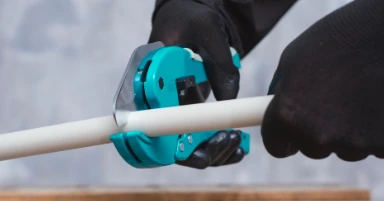
A ratchet-style cutter uses a sharp blade and a pair of handles. Each squeeze advances the blade through PVC or other plastic pipes approved by the tool manufacturer. No pipe cutter is right for every size, so check the cutter's stated capacity. A cutter designed for smaller plastic pipes may bind, drift off line, or damage a larger pipe.
A small pipe cutter, sometimes called a pipe slice, fits around a set pipe diameter and needs less clearance than many adjustable models. These cutters are useful in confined areas, but the size and intended material must match the pipe. Tool markings and the manufacturer's directions should settle any uncertainty before you begin.
How to Use an Adjustable Pipe Cutter
An adjustable pipe cutter works by forming a groove around the pipe and deepening it a little at a time. For a controlled cut, keep the wheel in that groove and add pressure gradually.
Measure and Position the Cutter
Measure the pipe, account for the depth of the fitting, and mark the cut line all the way around if that helps with alignment. Wipe dirt from the cutting area and support the pipe so it can’t shift. A vise can add stability, but its jaws should not crush or mark the material.
Open the adjustable pipe cutter until the pipe rests between the rollers and cutting wheel. Place the wheel directly on the mark, then turn the feed knob until the wheel makes firm contact. Heavy pressure at the start can push the wheel off line or deform thin tubing, so begin with only enough contact to establish the path.
Rotate and Tighten the Cutter
Rotate the cutter around the pipe for one or two complete turns, keeping the frame square to the pipe. Check that the cutting wheel returns to the same groove instead of tracing a second line. Turn the feed knob slightly, make another rotation, and repeat. Small adjustments help the wheel cut steadily without forcing it through the wall in one pass. Continue until the pipe separates.
Which way should you spin a pipe cutter? It depends. Many adjustable cutters simply rotate around the pipe, while some compact cutters have an arrow that shows the required direction. Use the arrow or the operating instructions supplied with your tool. The key is to keep the wheel tracking in one groove throughout the cut.
Deburr and Inspect the Cut
A pipe cutter can leave fewer rough edges than a saw, but the end may still need cleanup. Use a reamer or deburring tool suited to the pipe material to remove raised edges on the inside and outside. Keep sharp edges and loose shavings away from your hands. Then check that the end is square, smooth, and free of cracks or other visible damage. Test-fit the pipe before completing the connection.
How to Use a PVC Pipe Cutter
A PVC pipe cutter uses a blade instead of a wheel that travels around the pipe. Ratcheting models are common because the mechanism advances the blade in stages. Before cutting plastic pipes, confirm that the tool is rated for the material and diameter. Inspect the pipe cutter blade for chips, dull areas, or damage, and wear eye protection.
Using a Ratchet-Style PVC Pipe Cutter
Measure and mark the cut, then open the cutter jaws. Place the PVC pipe fully against the tool’s support and line up the blade with your mark. Hold the blade square to the pipe. This alignment is important because a tilted blade can produce an angled end that does not seat evenly in a PVC fitting.
Squeeze the handles to begin the ratcheting action. Release and squeeze again as the blade moves through the pipe. Keep the pipe and tool steady, and do not twist either one to speed up the cut. Once the pipe separates, release the mechanism according to the tool's directions. Inspect the cut ends of plastic pipes carefully, remove rough areas with a suitable deburring or chamfering tool, and check the fit before assembly. Other PVC cutters may use a different release or cutting action, so follow the instructions for the exact model in your hand. If the project calls for a threaded connection, review how to thread PVC pipe before moving on to assembly.
How to Get a Clean, Straight Cut
Clean cuts start before the blade or wheel touches the pipe. A pipe cutter works best when it matches the material and diameter. Mark the location carefully and support the work where movement could affect alignment. Replace a worn or damaged cutting wheel or blade instead of adding more force.
During the cut, keep the tool square and apply pressure in small stages. Watch the first score line on an adjustable pipe cutter because it guides every later pass. With plastic pipes, keep your hands away from the blade path and use the ratchet mechanism as designed. Afterward, deburr the edge, inspect it in good light, and test-fit the pipe. Follow the cutter manufacturer's safety and operating directions, especially when the tool includes a spring-loaded blade or a directional marking.
Pipe Cutter vs. Hacksaw: Which Should You Use?
A properly matched pipe cutter usually offers better control and can leave a straighter edge with less cleanup. Compact models may also work where a hacksaw lacks room for a full stroke.
A hacksaw can still be practical when the pipe is outside a pipe cutter's capacity or when you do not have the correct cutter for the material. Saw cuts need careful guidance and may require more deburring. Choose the tool based on the pipe material, diameter, access, and the manufacturer's stated limits.
Find PVC Pipe and Fittings at Maxx Supply
A careful cut is one part of a dependable PVC connection. The pipe, fitting, and valve also need to suit the system and its operating requirements. Maxx Supply carries Schedule 40 PVC pipe, fittings, valves, and related supplies for plumbing, irrigation, drainage, and wastewater projects. Explore the available PVC products for your next installation, or contact the Maxx Supply team if you need help identifying a component for your application.