
2nd Jun 2026
PVC Pipe for Data Centers
PVC pipe for data centers plays a significant role in supporting the infrastructure that keeps modern digital operations running without interruptions. Every data center depends on reliable systems to manage heat, protect cables and control water flow, especially as demand for cloud computing, AI processing and hyperscale facilities continues to rise.
Engineers and facility managers prioritize materials that reduce risk, lower energy consumption and support long-term scalability. PVC pipe meets these requirements by offering corrosion resistance, durability and cost efficiency across multiple applications. Pipe systems using PVC are also easier to install.
From liquid cooling systems to conduit protection and drainage, PVC piping supports essential operations while simplifying installation and maintenance. As data center construction evolves to meet higher density and performance expectations, PVC continues to serve as a dependable solution across a wide range of piping systems.
WHY DATA CENTERS NEED RELIABLE PIPING SYSTEMS
Reliable piping systems form the backbone of any data center environment. Cooling systems regulate server temperatures and prevent overheating, which directly affects uptime and hardware lifespan. Without consistent data center cooling, equipment performance drops and failure risks increase. High-density racks and increasing data loads place even more strain on cooling system performance, which makes dependable piping essential for maintaining stable operating conditions.
Water management also depends on leak-resistant plumbing. Condensate removal, chilled water distribution and backup systems require secure piping to prevent water damage near sensitive data infrastructure. Even minor leaks can trigger costly downtime or equipment loss. Properly designed piping systems also support rapid detection and isolation of issues, which helps teams respond before small problems escalate into major failures.
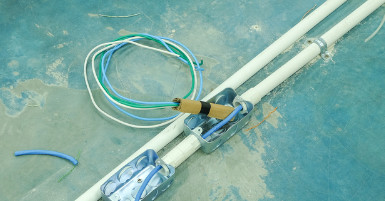
Electrical conduit systems rely on durable pipe materials to protect fiber optics and power cables. PVC pipe provides insulation and physical protection, which reduces interference and damage risks. A failure in any of these piping systems can disrupt operations, compromise data and increase operational costs.
COMMON USES OF PVC PIPE IN DATA CENTERS
PVC pipe appears throughout a data center in mechanical and electrical systems. Its versatility allows engineers to standardize materials across multiple applications:
- Cooling water distribution within liquid cooling systems
- Condensate drainage lines connected to HVAC equipment
- Electrical conduit for network and power cable protection
- HVAC drainage and overflow piping
- Water treatment and filtration systems
- General utility and maintenance piping systems
These applications benefit from PVC’s resistance to corrosion and chemical exposure. Unlike metal pipes, PVC pipes maintain performance in environments where water treatment chemicals or humidity could degrade other materials.
COOLING SYSTEMS AND PVC PIPE
Cooling systems represent one of the most critical uses of PVC pipe for data centers. High-density server racks generate significant heat, and efficient thermal management ensures consistent performance.
PVC piping supports chilled water loops that transport cooled liquid to server racks. In liquid cooling systems, PVC pipe helps move coolant efficiently while minimizing pressure loss. Its smooth interior surface improves flow rates and reduces energy consumption within the cooling system.
Cooling towers and supplemental cooling loops also rely on PVC piping for water circulation and condensate removal. These systems demand leak prevention and long-term durability, especially in continuous operation environments.
PVC also supports condensate management by channeling moisture away from equipment. Proper drainage prevents water accumulation and protects sensitive electronics. By maintaining reliable piping connections and integrating valves for flow control, operators ensure stable and efficient cooling operations.
BENEFITS OF USING PVC PIPE FOR DATA CENTERS
PVC pipe offers several advantages that align with the performance and cost requirements of modern data center construction. These benefits extend across installation, operation and long-term maintenance. Benefits include:
- Corrosion resistance prevents degradation from water, chemicals and humidity.
- Lightweight structure simplifies handling, transport and installation.
- Lower maintenance requirements reduce operational costs over time.
- Smooth interior walls improve flow efficiency and reduce friction loss.
- Chemical resistance supports water treatment and filtration systems.
- Long service life ensures reliability in controlled environments.
- Reduced shipping weight lowers logistics costs.
- Energy efficiency is supported by optimizing fluid movement and reducing pump strain.
Compared to metal pipes, PVC eliminates concerns about rust and scaling, which can restrict flow and increase maintenance demands. These advantages make PVC a strong candidate for sustainable infrastructure planning, especially in facilities focused on reducing energy consumption and improving system longevity.
SCHEDULE 40 VS. SCHEDULE 80 PVC IN DATA CENTERS
Understanding the difference between Schedule 40 and Schedule 80 PVC helps engineers choose the correct material for each piping system.
Schedule 40 PVC pipe features thinner walls and works well in lower-pressure applications such as drainage, conduit and general water movement. It provides a cost-effective option for many standard data center uses. Learn more about Schedule 40 PVC pipe for these applications.
Schedule 80 PVC pipe includes thicker walls and higher pressure ratings. Engineers often select it for systems that require greater strength, such as pressurized liquid cooling systems or critical water distribution lines. Explore Schedule 80 PVC pipe for high-performance environments.
Key differences include:
- Wall thickness and strength
- Pressure handling capabilities
- Cost difference based on material density
- Application sustainability based on system demands
Proper PVC pipe sizing ensures optimal performance and compatibility across all systems. Higher-pressure environments typically benefit from Schedule 80, while non-pressurized systems perform efficiently with Schedule 40.
INSTALLATION BEST PRACTICES FOR PVC IN DATA CENTERS
Installation quality directly affects the reliability of any piping system in a data center. Teams must follow strict best practices to ensure long-term performance, including:
- Maintain proper pipe support spacing to prevent sagging or stress.
- Use correct solvent welding techniques to ensure secure joints.
- Account for thermal expansion and contraction during system design.
- Conduct pressure testing before system activation.
- Label all piping systems clearly for maintenance and troubleshooting.
- Coordinate installation with HVAC, electrical and structural systems.
Accurate alignment and proper joint curing prevent leaks and maintain system integrity. Coordination between trades ensures that piping systems integrate smoothly with the broader data infrastructure.
COMMON CHALLENGES AND CONSIDERATIONS
PVC pipe offers many advantages, but engineers must evaluate certain limitations prior to installation, including:
- Temperature limits can restrict use in extremely high-heat environments. Designers must confirm that operating conditions remain within acceptable ranges for PVC materials.
- Ultra-violet (UV) exposure can degrade PVC over time if installations occur outdoors without protection. Indoor data center environments typically avoid this issue.
- Fire code compliance requires careful material selection and adherence to building regulations. Some applications may require fire-rated alternatives or additional protective measures.
- Chemical compatibility also requires verification, especially in specialized water treatment systems. Pressure ratings must match system demands to prevent failures.
By addressing these considerations during planning, teams can ensure reliable and compliant installations.
MAXIMIZE EFFICIENCY WITH PVC PIPE FOR DATA CENTERS
PVC pipe provides a reliable, cost-effective solution for modern data center infrastructure. It supports cooling, drainage, conduit and water management systems while improving energy efficiency and reducing maintenance demands. Its adaptability allows engineers to design scalable systems that meet evolving performance requirements.
Maxx Supply delivers high-quality PVC pipe, fittings, valves and industrial piping components designed for demanding environments. Facility managers and engineers can improve system reliability and streamline installation by selecting the right materials and configurations for each application. Evaluate current infrastructure, identify opportunities for improving piping performance and implement solutions that support long-term operational success by using quality pipe from Maxx Supply.