
1st Jun 2026
Understanding Female Pipe Thread (FPT) Applications
Plumbing and piping systems rely on secure, leak-resistant connections. Threaded fittings play a significant role in achieving this reliability.
What is FPT? Knowing about female pipe thread and how it interacts with male pipe provides an advantage when designing or repairing plumbing systems. Female pipe thread connections appear across residential plumbing, irrigation setups, and industrial piping because they offer flexibility, durability, and ease of maintenance.
Materials such as PVC, brass, and stainless steel often feature these threads, which allow tight mechanical connections between fittings, valves, and equipment. A strong grasp of thread types prevents leaks, avoids costly compatibility issues, and improves overall system performance.
WHAT DOES FPT MEAN?
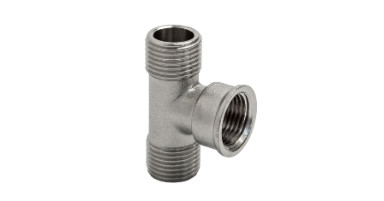
FPT refers to the internal threading inside a fitting or port that accepts a male pipe thread (MPT) component. Installers commonly pair FPT with MPT, where the external threads of the male fitting screw directly into the internal threads of the female fitting.
Most systems in the United States follow the National Pipe Thread (NPT) standard, which uses tapered threads. That taper allows the threads to tighten progressively as they engage, forming a secure mechanical seal. FPT, in practical terms, refers to compatibility. FPT provides the receiving end of a threaded connection that locks together with male components.
This design allows users to connect pipes, valves, and equipment quickly without welding or complex jointing methods. Proper installation ensures a tight seal that resists leaks under pressure.
HOW FPT CONNECTIONS WORK
FPT connections rely on the interaction between internal and external threads. A male pipe thread fitting screws into a female pipe thread port, and the tapered design forces the threads to compress tightly together.
That compression creates the primary seal. Installers often use PTFE tape or thread sealant to fill microscopic gaps between threads and enhance leak resistance. The seal forms through mechanical force and sealing material, not through adhesives.
Proper thread engagement matters. If the installer stops too early, gaps remain and leaks develop. If the installer overtightens the connection, the fitting can crack, especially in PVC systems. Careful alignment and steady tightening ensure a secure, durable connection.
COMMON TYPES OF FPT PVC FITTINGS
Manufacturers produce a wide range of PVC fittings with female pipe thread connections to support different system layouts. These fittings allow transitions, directional changes, and equipment connections.
Common FPT fittings include:
- Female adapters, which connect plain pipe to threaded components and come in options such as Schedule 40 female adapters and Schedule 80 female adapters
- Threaded couplings, which join two male pipe thread sections
- Threaded unions, which allow easy disconnection for maintenance
- Reducer bushings, which connect different pipe sizes while maintaining threaded compatibility
- Threaded valves, which integrate shutoff or control functions into piping systems.
- Bulkhead fittings, which create secure connections through tanks or walls
Each fitting supports specific use cases, but all of them rely on the same core principle of internal threads accepting a matching male pipe thread.
COMMON APPLICATIONS FOR FPT CONNECTIONS
Female pipe thread fittings appear in a wide variety of systems because they allow easy assembly and disassembly without specialized tools. Their versatility makes them a preferred choice across industries.
Common applications include:
- Irrigation systems, where installers frequently connect valves and sprinkler components
- Pool and spa plumbing, which requires durable, corrosion-resistant threaded connections
- Residential plumbing, including water supply lines and fixture connections
- Pump and filtration systems, where maintenance access remains critical
- Industrial process piping, which often requires modular and serviceable connections
- Water treatment systems, where components need frequent replacement or inspection
Threaded fittings provide flexibility in these environments, especially where systems require periodic adjustments or repairs.
ADVANTAGES OF FPT FITTINGS
FPT fittings offer several practical benefits that make them a go-to solution in many piping systems. Advantages include:
- Easy assembly and disassembly without cutting or welding
- Removable connections that simplify maintenance and repairs
- Compatibility with a wide range of valves, pumps, and equipment ports
- Flexibility when transitioning between different piping components
- Availability in multiple materials, including PVC, brass, and stainless steel
- A wide range of sizes that align with standard pipe dimensions and PVC pipe sizing
These advantages explain why female pipe thread connections remain a standard across residential and industrial applications.
HOW TO INSTALL FPT FITTINGS PROPERLY
Proper installation ensures long-lasting, leak-free performance. Installers should follow a consistent process to avoid common issues. Never use solvent cement on threaded joints, as it can damage the fitting.
Take the following steps to install FPT fittings properly:
- Confirm that thread types match prior to installation.
- Wrap male pipe thread components with PTFE tape or apply an approved thread sealant, leaving the first thread free of tape.
- Align the threads carefully before turning to avoid cross-threading.
- Tighten by hand first, then use a wrench for additional turns as needed.
- Stop tightening once the connection feels secure and properly seated.
MISTAKES TO AVOID
Attention to detail during installation directly impacts system reliability. Avoid these common mistakes:
- Overtightening PVC threaded fittings, as this can cause cracks
- Mixing incompatible thread standards, such as NPT and BSP
- Applying excessive thread sealant, which can interfere with proper engagement
- Cross-threading due to poor alignment
- Misaligning components, which places stress on the connection
CHOOSING THE RIGHT FPT FITTING
Selecting the correct female pipe thread fitting requires careful evaluation of system requirements. Several factors influence compatibility and performance, including:
- Pipe size compatibility, which must match system specifications
- Pressure and temperature requirements, which dictate material selection
- Material compatibility, especially when connecting dissimilar metals or plastics
- Wall thickness considerations, such as Schedule 40 versus Schedule 80
- Correct thread size and type, ensuring proper fit with male pipe thread components
A thoughtful selection process reduces the risk of leaks, failures, and costly rework.
MAKE FPT CONNECTIONS WITH CONFIDENCE
Female pipe thread remains one of the most widely used connection types in plumbing and piping systems because it combines simplicity with reliability. A clear knowledge of how an FPT interacts with an MPT and how proper installation techniques prevent leaks allows anyone to build stronger, more efficient systems. Careful selection of fittings, attention to compatibility and correct installation practices all contribute to long-term performance.
Maxx Supply provides a dependable source for high-quality threaded PVC fittings, adapters, and system components designed to meet demanding applications. Explore the available options and choose fittings that match your system requirements to ensure consistent, leak-free operations.