
26th Mar 2026
Exploring What PVC Is Used For: Versatile Applications Across Industries
Polyvinyl chloride, better known as PVC, ranks among the most widely used synthetic plastic polymers in the world, with annual production in the tens of millions of tons. The carbon and chlorine atoms give PVC a mix of durability, chemical resistance, and cost-effectiveness that many other plastics and traditional materials struggle to match. Manufacturers start with PVC resin and adjust its formulation with additives such as plasticizers, stabilizers, and impact modifiers to create everything from rigid PVC pipes to ultra-flexible tubing and films. PVC plastic supports demanding applications in construction, healthcare, electronics, packaging, and consumer products.
You’ll find PVC material in water pipe systems, window frames, medical IV bags, wire coatings, credit cards, flooring, and countless other products that rely on long service life and low maintenance. In its unplasticized PVC form, it provides high stiffness and weather resistance for structural profiles and PVC piping, while flexible PVC, known as plasticized PVC, delivers softness and bendability for cable insulation, inflatable products, and medical tubing.
Variants such as chlorinated PVC and modified PVC extend performance into higher temperatures and more aggressive environments. At the same time, the industry focuses more intently on PVC recycling, circular design and responsible management of vinyl chloride monomer and additives to reduce environmental impacts over a product’s full life cycle.
PVC IN CONSTRUCTION AND INFRASTRUCTURE
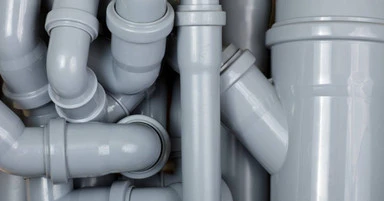
PVC in construction dominates global demand, with major uses in pipe, profiles, and cable insulation for buildings and infrastructure systems. In water supply and sewer systems, PVC pipe, and PVC tubing handle drinking water, stormwater, and wastewater because they resist corrosion, scaling, and many dissolved chemicals far better than metal. This chemical resistance helps utilities maintain water quality, especially in buried water pipe networks where soil conditions and disinfectants can aggressively attack metals. PVC production for pipes typically relies on unplasticized PVC, which delivers high stiffness, good pressure performance, and long-term dimensional stability.
PVC piping also offers a cost advantage over copper, ductile iron, and some steel systems because it weighs less, installs more easily, and usually requires fewer specialized tools. Its smooth internal surface reduces friction losses, which can lower pumping energy over decades of operation. Schedule 40 PVC pipe, a common standard in residential and light commercial projects, balances pressure rating with manageable weight for installers in the field. Maxx Supply provides detailed guidance on Schedule 40 PVC pipes to help contractors and DIY users select the correct PVC product, fittings, and joining methods for plumbing and irrigation systems.
In electrical installations, rigid PVC and related PVC compound formulations insulate and protect cables and conduits. Compared to metal conduit, PVC conduit doesn’t corrode, weighs less, and avoids electrical conductivity, which enhances safety in many environments. PVC’s low thermal conductivity also reduces condensation and helps protect conductors in humid or underground conditions.
Window frames and siding made from PVC or modified PVC resist weathering, insects and rot, which makes them popular in building facades and exterior trim. By combining PVC film laminates with rigid PVC profiles, manufacturers achieve durable, low-maintenance finishes that retain color and gloss even after long-term UV exposure.
PVC’S ROLE IN MODERN DESIGN AND MAXX SUPPLY’S EXPERTISE
PVC’s versatility across rigid PVC, flexible PVC, plasticized PVC, unplasticized PVC, chlorinated PVC, and other tailored PVC compound systems explains why industries keep expanding its use. Architects specify PVC window frames, siding, and membranes to achieve long-term weather resistance and energy performance in building envelopes.
Infrastructure developers and utilities rely on PVC material for water pipes and sewer systems that deliver safe drinking water and manage wastewater reliably over decades. Designers of consumer and medical products exploit the same polymer backbone to create soft tubing, durable housings, and high-clarity PVC film packages with consistent quality.
Which PVC variant and formulation best fits a given application, and how can it support sustainability goals? That assessment weighs PVC properties such as chemical resistance, impact strength, and temperature performance against regulatory requirements, recycling pathways, and potential alternatives.
When projects involve HVAC systems, for example, engineers must consider temperature ratings, condensate management, and codes. Maxx Supply’s in-depth article on using PVC in HVAC systems gives contractors practical guidance on safe and efficient specification.
Maxx Supply supports this decision-making with technical resources and product expertise on PVC pipe, PVC tubing, and related fittings for residential, commercial, and industrial projects. Our guidance on what is PVC used for in outdoor applications walks DIYers, builders, and designers through material selection for weather-exposed structures, irrigation, and garden features. For code-compliant plumbing and pressure systems, our material on Schedule 40 PVC pipes equips users with essential details on dimensions, pressure ratings, and installation practices.
When projects demand a choice between PVC and higher-temperature chlorinated PVC, the PVC vs. CPVC resource clarifies where each resin excels.
Whether you design infrastructure, medical devices, consumer products, or sports and leisure goods, partnering with knowledgeable supplier Maxx Supply helps you select the correct polyvinyl chloride grade, optimize performance and plan for recycling and responsible end-of-life handling. Our team can walk you through PVC production options, discuss how different formulations behave in your application, and connect you to inventories that match bold technical and sustainability requirements.
Maxx Supply is ready to support your next design or installation.